




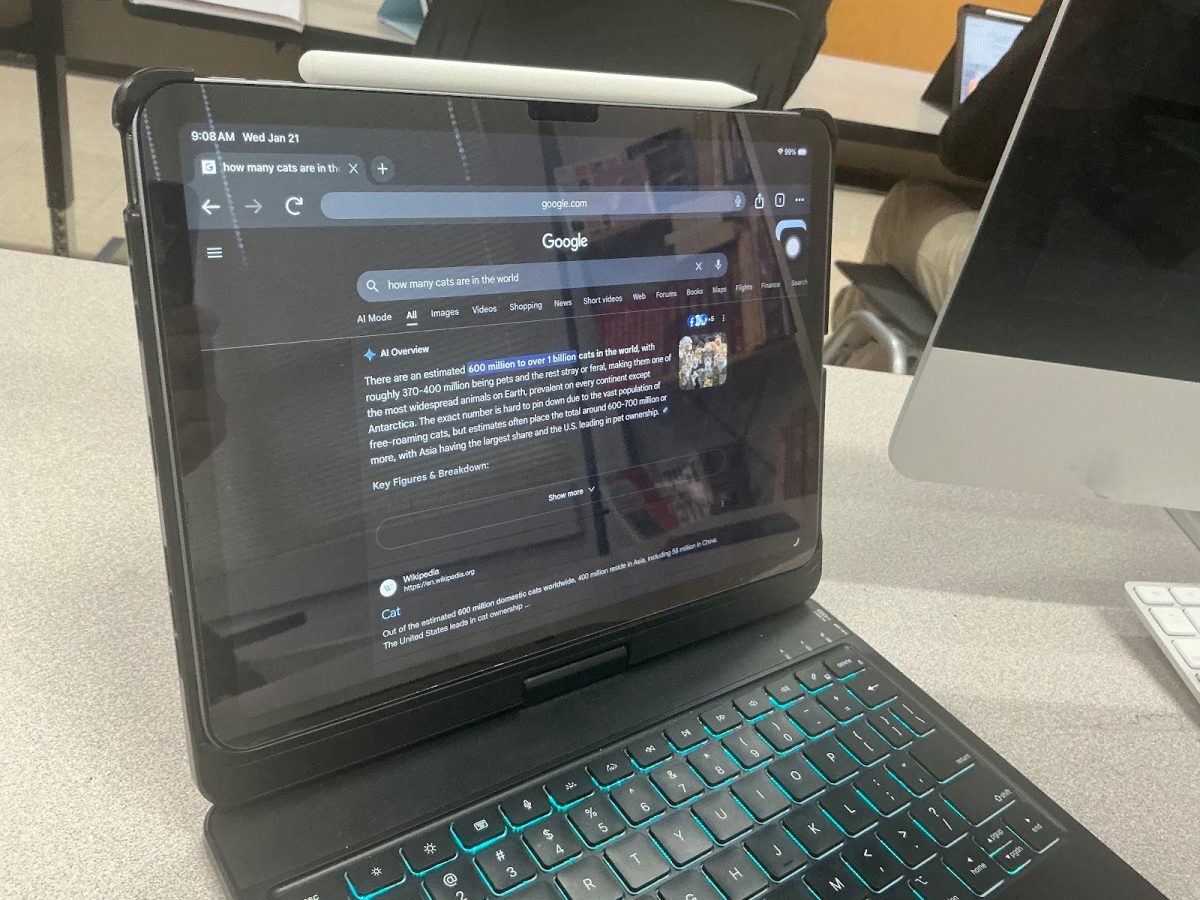

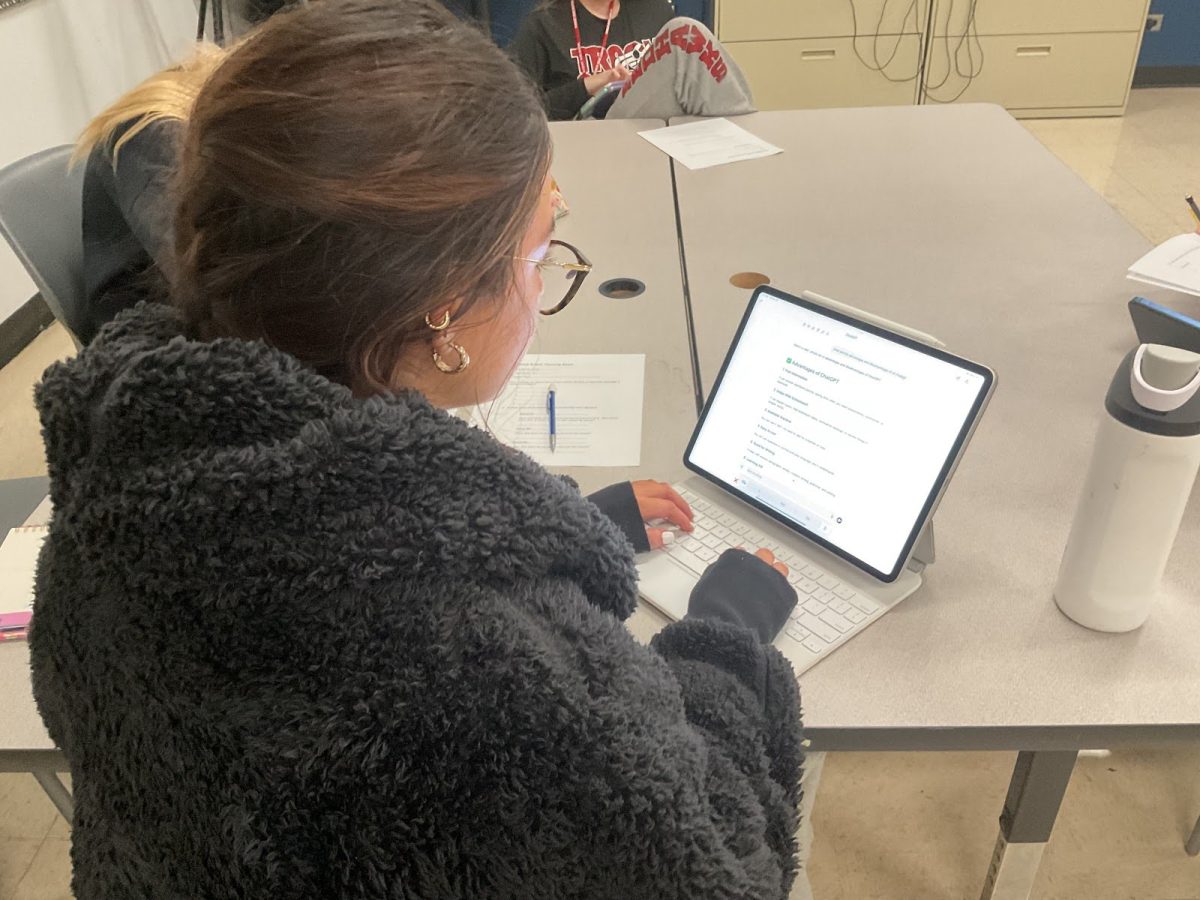
Artificial intelligence has become so prevalent in schools that students and educators can rarely go a day without encountering it. While NASA defines artificial intelligence as “computer systems that can perform complex tasks normally done by human reasoning, decision making, and creating,” its role in the classroom remains a subject of intense debate.
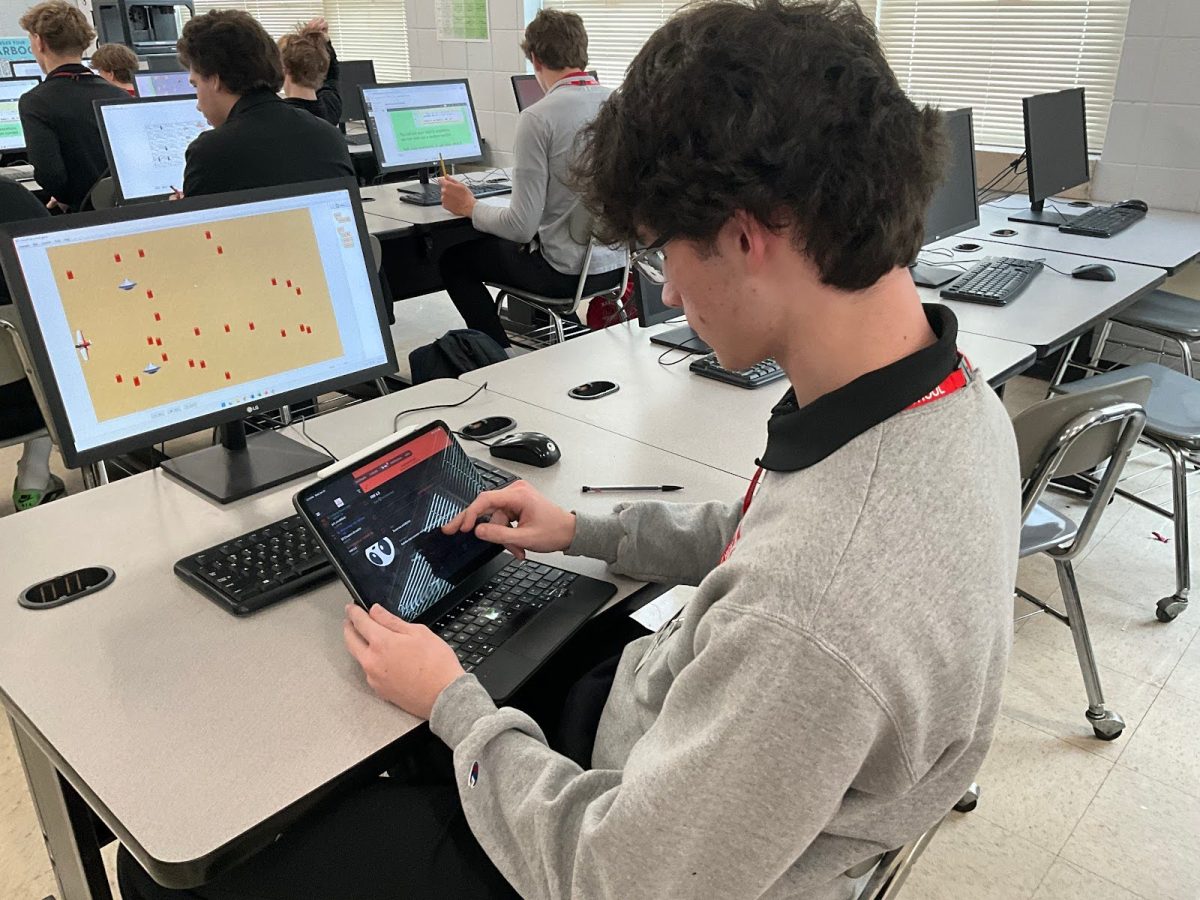
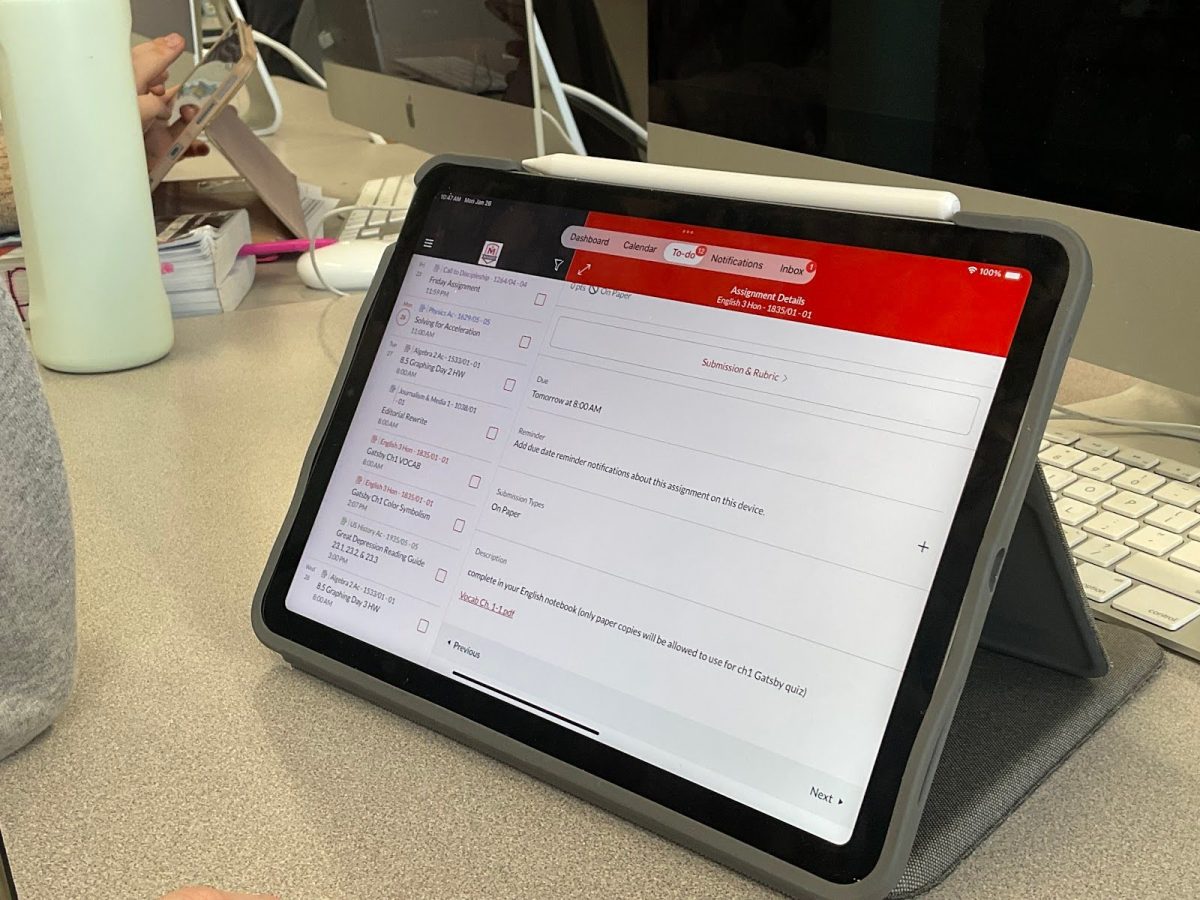
AI is used for a wide variety of things such as homework help, study guides, outlines, and more. One concern is that students are growing to rely on it too much.
“It helps check my answers and also gives me other knowledge on the subject I’m learning to help me better understand it,” said Marist student Madelyn Dougherty.
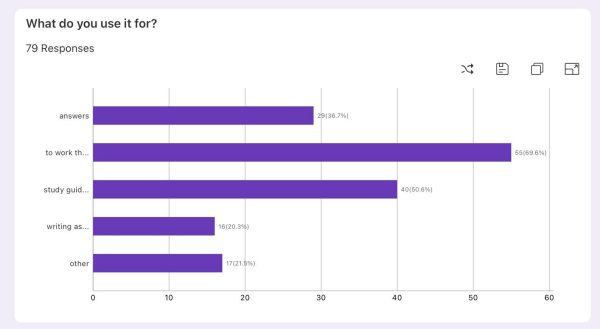
MHS Media conducted a poll of 79 students across all grade levels about the use of AI. According to the survey, 69.6% of students use AI to work through problems, 50.6% said that they use it to create study guides, 20.3% said they use it for writing help, and 36.7% admit they use AI for answers.
The University of Illinois suggests the technology can personalize learning, provide immediate feedback, and make abstract concepts more understandable. Students have expressed that they think AI is a resourceful tool when used correctly.
“I utilize it more as a study tool or search box for a random fact,” said junior Leo Hughes.
“I use ChatGPT to check if my answers are correct when I am unsure if my work is accurate. When my answers are wrong sometimes it gives me solutions on how to get the right answer and doesn’t immediately give me the answer,” said junior Emily Bulvan.
While AI can be a resourceful tool, it is also used to blatantly cheat.
“We have kids turn in their essays through these AI detectors, and we noticed large amounts, that were not theirs. Then that comes with issues of plagiarism,” said Dean Daniel Higgins. “It takes away from the students’ ability to think critically, the students’ ability to explain their side of the story or their issues.”
Due to the increasing use of AI, it has been harder for academically honest students to do their work.
“It’s a bad tool because now teachers suspect everyone for using it,” said sophomore Rita Loureiro.
The National Library of Medicine says, “Generally, in higher education, students and academics may feel overwhelmed by the increasing reliance on AI tools, particularly when they lack sufficient training or technological literacy.”
The long-term effects on college readiness are also a concern.
“I do believe that AI-usage is making students less prepared for college because some students use the resource to complete the assignments for them. In doing so, some students are not understanding the concepts that are being covered in class that they need for college,” said Hughes.
The consequences of using AI in college are much worse than in high school.
“When you’re in college in a couple of years from now, there will probably be a zero tolerance on this, because the detection systems will be stronger, and the consequences will be higher,” said journalism teacher Susan Carlson, “I will say that at the college level, plagiarism of any kind using ChatGPT for a writing assignment can result in failing an entire course, not just one assignment, and also expulsion from a university.”