


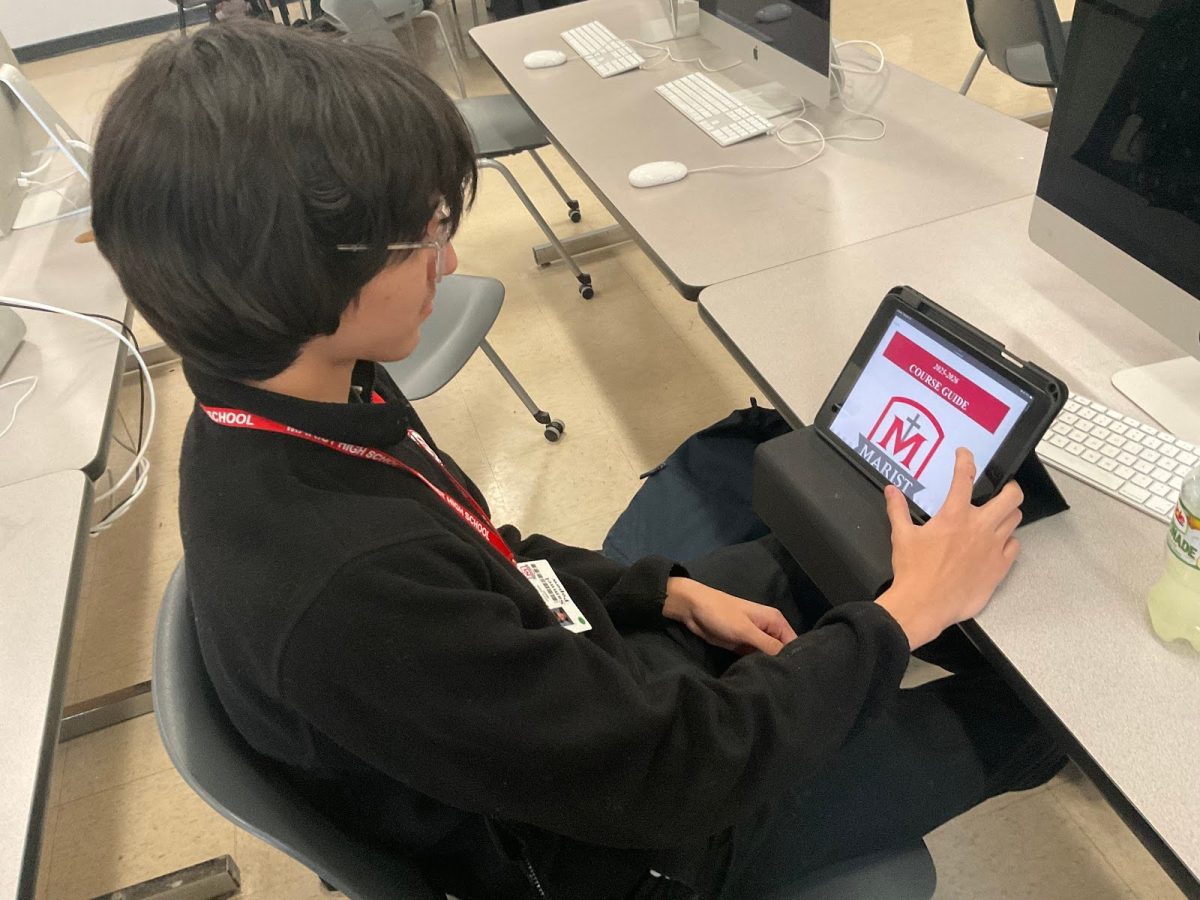









At Marist, the debate between semester and year-long classes is a current question, as students and teachers alike are both considering which format they truly like better. With the school offering only a small number of semester-based classes in the past, this conversation has grown.
In recent years, the school has gradually added more semester-long electives, but next school year marks the most significant shift yet, with 33 semester courses planned across social studies, fine arts, communication, technology, religion, physical education/health, and a single semester-long English class.
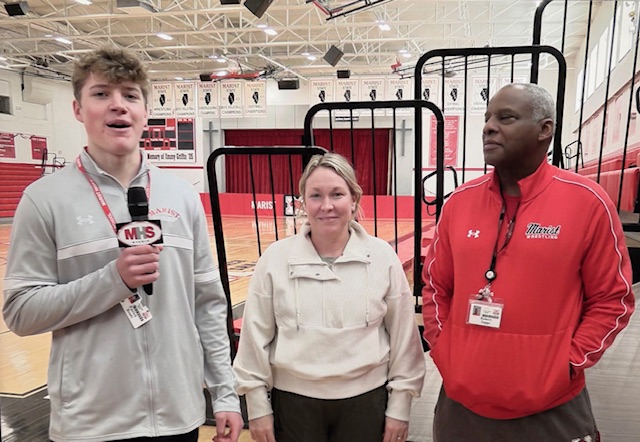
“The reason for doing this is it allows students to experience or explore twice as many subjects,” said Patrick Ryan, who oversees scheduling. “Instead of being locked into a full-year course, students can try something one semester and something totally different the next.”
Some religion classes will see some minor restructuring next year. Senior religion will remain year-long, but sophomore and junior courses will shift to a semester format.
“We did that for about 10 years, then we made them full courses and now we are going back to semester-long courses,” said Ryan. “Everything that is old is new again.”
Marist is offering students several new semester-long courses for the ’25-26 school year aimed at expanding career pathways. These classes include Athletic Training, Sports Media, a child psychology/development class, and a dual credit with Loyola University for people interested in teaching.
“When we did the course survey with students, the data showed a significant interest in courses related to the sports profession and in working with children,” said Ryan. “That’s where the idea for these courses came from.”
The goal of these class changes and additions is to better align with student needs and prepare students for the world beyond Marist.
“We are gonna try this and see if this is what’s best for our students, and if it isn’t, we are not locked into this forever,” said Ryan.
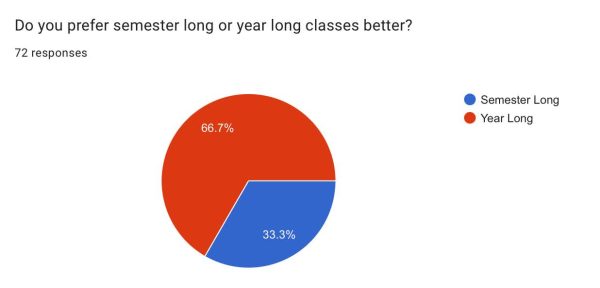
An MHS Media survey of 72 students found that 97.2% have taken a semester-long course. The same survey reported that 66.7% of students prefer year long classes over semester-long ones.
“A year-long class can get boring,” said junior Emily Bulvan. “With a semester class it gets switched up halfway through the year, which is very refreshing.”
Other students feel that the shorter structure helps to keep them on task without feeling burned out.
“I prefer semester-long classes because it has less material for you to learn,” said junior Aidan Sellas. “You are not as stressed for tests and finals to recall past information from a semester ago.”
Although semester classes provide a quicker pace and a chance to explore more subjects in a single year, many students find it hard to engage with the material.
“I feel that semester-long classes, while beneficial, limit how deep students can get into a topic,” said junior Eddie Dougherty. “Year-long classes allow teachers to get through more material because there is more time and students can explore topics deeper.”
Many students share this same opinion, and point out how year-long courses allow them to stay connected to the material longer.
“I prefer year long courses because they provide stability with the base you gain from the beginning of the year is built upon all year, whereas semester long courses can feel rushed and it forces you to reset and get used to a new class at the start of the second semester,” said senior Akir Finley.
Teachers who work with both formats, including Rita Hoffmann, who teaches Photo 1 and 2 for a semester, as well as Graphic Design 1 and AP 2D design for the entire year, says each structure comes with its own set of pros and cons. Neither format has a clear advantage over the other.
“There’s positives and negatives to both,” said Hoffmann. “Semester classes help students figure out what they’re actually interested in, especially in intro courses. But for upper-level classes like AP, having a full year really supports the depth and pace of the curriculum.”
One of the biggest drawbacks to semester-long courses from teachers is that the relationships teachers build with their students ends halfway through the year.
“Some teachers will tell you they work really hard to get to know their students in the first semester, they build that relationship, and now it is over,” said Ryan.
While each structure offers something different, Hoffmann notes how shorter courses can benefit students who are exploring what they want to do.
“Semesters give kids the chance to try something new without committing to it for an entire year,” said Hoffmann. “If it’s not the right fit, they can adjust and move toward a class that better matches their goals.”
She also recognizes the variety that semester classes can bring, which often motivates students.
“A semester class mixes things up. Students get the opportunity to meet teachers and build connections, which can energize their schedule,” said Hoffmann.
While semester classes offer variety and flexibility, many subjects benefit from more extended and continuous instruction.
“For classes that build on complex skills, having a full year makes all the difference,” said Hoffmann. “Students grow at a steadier pace, and I can push them further because we are not racing against the clock as much.”
The changes in elective options will play an important role in the on-going debate.
“Like anything, change can be exciting but it also can be stressful at the same time,” said Ryan.