















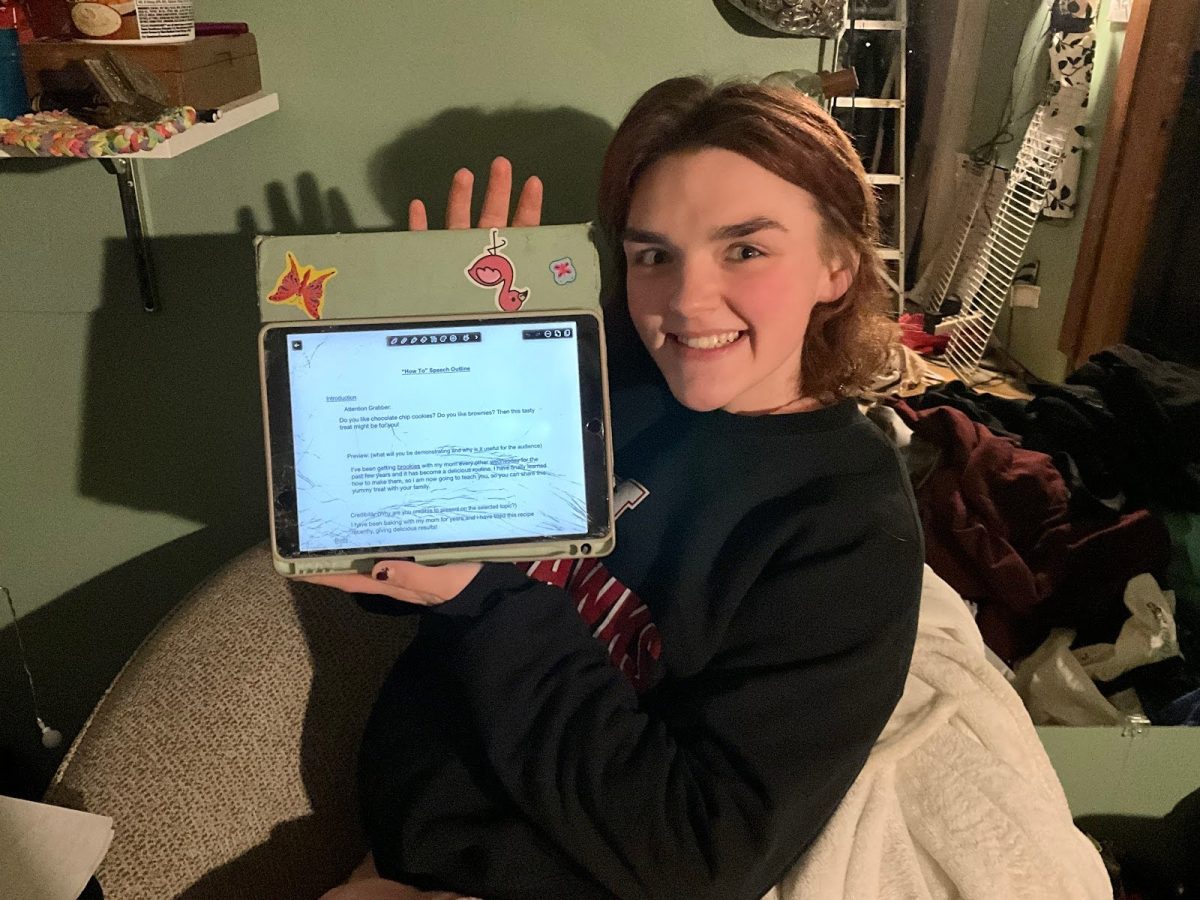
It’s time to address the elephant in the room. Whether they like it or not, TikTok trends have been seeping out of students’ brain-rotted heads and into the classroom.
Slang is considered to be the most common of these trends. Students are constantly using it, whether it be during a lecture or in the middle of a silent class period, most teachers will not get through the day without hearing at least “six or seven” slang terms.
In fact, the use of slang has grown so much in the past year that even people outside of schools are learning about these phrases. Dictionary.com and the Oxford dictionary have chosen their words of the year to be six-seven’ and ‘rage-bait.’
Some teachers have even picked up the trend.
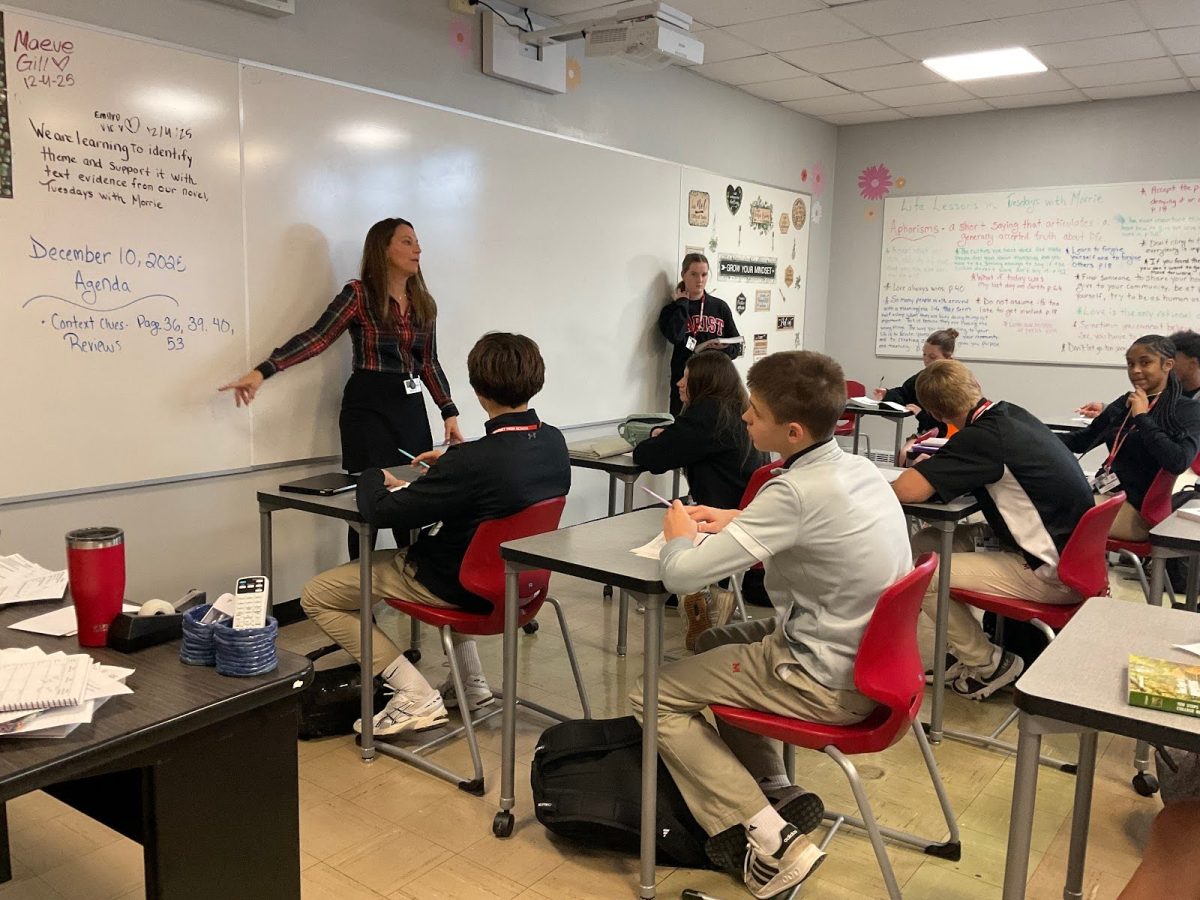
“I’ll use it in class just to entertain or connect with the students,” said Western Civilizations, Resource, and African American Studies teacher Mr. Dane Mayer.
TikTok may even be be used in lessons.
“There’s some good storytelling happening. If you can bring that into the classroom, that could be a really good use of social media,” said English teacher Ms. Meg Scanlon.
They aren’t the only ones to discover this new resource. Education Weekly says that students whose teachers try to use slang feel more respected and have a closer relationship with them.
Sometimes, it does get to a point where teachers have to make up creative ways to fight back.
“I will use [slang] so much, and very specifically incorrectly, that it frustrates the students enough to get them to stop doing it,” said Mayer.
However, at least in Mayer’s classes, students seem to remember that they are still in school and treat their teachers and peers with respect in the classroom.
“I don’t see people making TikToks in class, but I see people making TikToks in the hallway pretty frequently,” said Mayer.
“If I were to see a student on Tiktok during class, I’d be annoyed, but not because it’s Tiktok specifically,” said Scanlon.
The recent rise of TikTok use has also changed how many teachers run their classes.
“It’s made me a little more vigilant of just people’s attention spans being a little bit lower,” said Mayer.
For example, Mayer has adjusted his lesson plans to suit his students’ newfound needs. This involves changing some activities to get people up and moving around the room, working together on worksheets, and walking around the room during lectures to keep people engaged.
Scanlon welcomes the TikTok trends in her room, at least to a certain extent.
“Slang should be allowed in the classroom, because it’s still a language. Every generation has their own,” said Scanlon.
Despite the recent phone ban, many, if not all, students have found a way to access TikTok and go on it during classes, some without even realizing it.
“I do it automatically,” says freshman Kimberley Ortiz.
“Social media has a snatch because it automatically shapes the way we talk whether we realize it or not,” said freshman Brendan Bjork.
It’s a hard habit to get out of once it begins and the addiction is extremely obvious in a high school environment. Today, a high-school student without TikTok is like the average person going without sugar. They never realize how much they rely on it until it is taken away.