












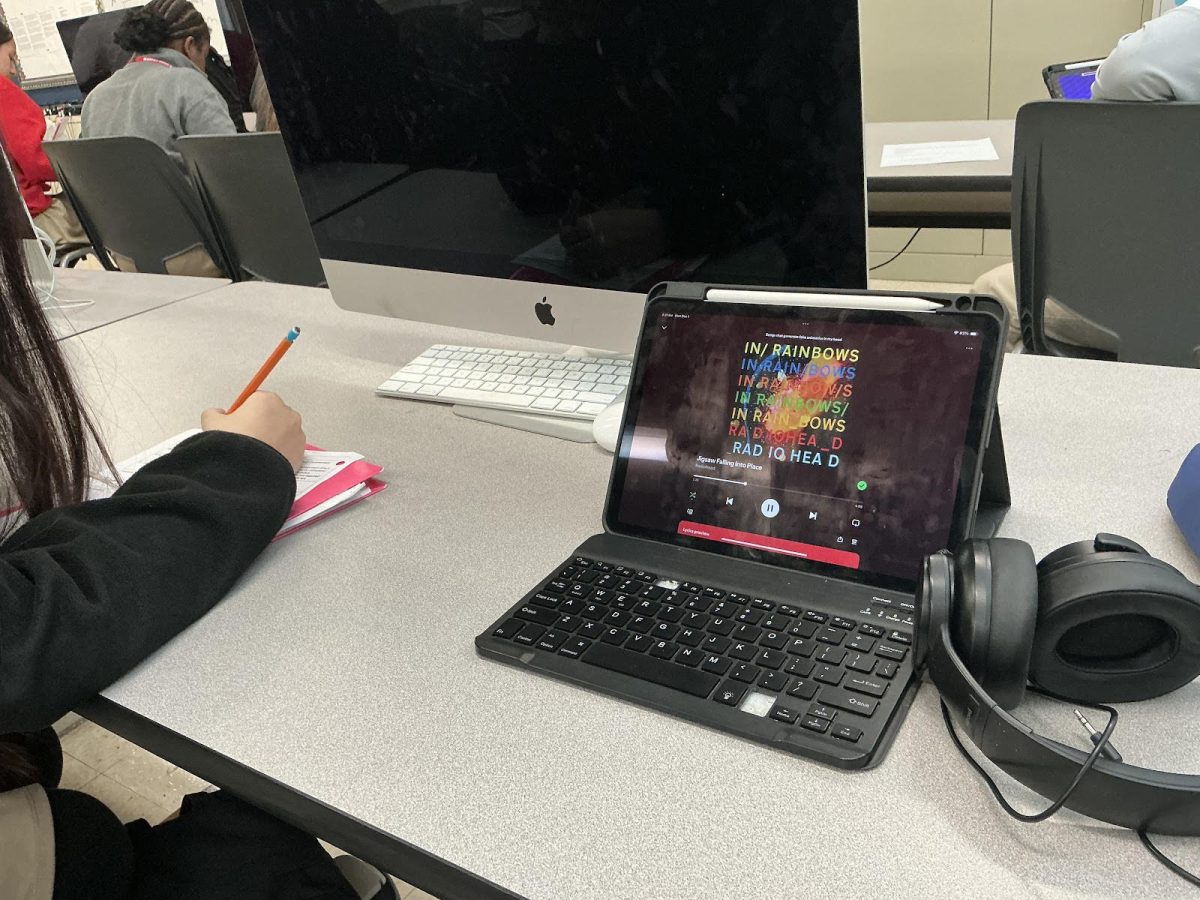
For countless students, music is an important staple in their daily lives. It could be the background noise that brings life to their day, an important aid in focusing on work, or coping with something difficult.
However, most people are not aware of the effects music has on them. Much research has been done in this area.
According to the American Psychiatric Association, music therapy was found to have an overall beneficial effect on stress serious mental health problems, and other kinds of disorders.
“There are some people with disability accommodations that have been recommended the use of music to cope,” says freshman student Samantha Raymond.
Additionally, Harvard Health Publishing states that music creates significant improvements in mental health by decreasing anxiety, shifting moods, and improving motivation.
Specific types of music have their own unique effects on listeners. A study in the National Library of Medicine states that different genres of music have unique effects. For instance, when subjects listened to music designed to have specific effects (designer music), they experienced significant increases in relaxation, caring, mental clarity, and vigor.
CNN Health reports that listening to music that is personally meaningful has been found to improve the brain’s adaptability in patients with early Alzheimer’s disease or mild cognitive impairment.
Students’ and teachers’ own personal listening experiences echo this finding.
“I think listening to music can be beneficial, depending on what you’re listening to. If it’s a more upbeat song, then probably not, but if it’s slower background music, then yes,” said freshman Jane Hornung.
“I think it can definitely help some students stay focused. I used to listen to music as a student, using it to just help me stay focused on what I was reading or writing,” said English teacher Jennifer Hauptman.
What people listen to can really affect their mood.
“Whatever type of mood I’m in, that’s the type of music I would like to hear,” says math teacher Elizabeth Chlebek. “If I’m in a good mood or if I’m excited for something, I want to listen to that type of more fast-paced music.”
There are various playlists on multiple music streaming platforms that can reflect different moods.
“I like listening to classical music playlists,” said Hornung. “They bring so much life and energy into the room, especially in the morning when it’s gloomy outside.”
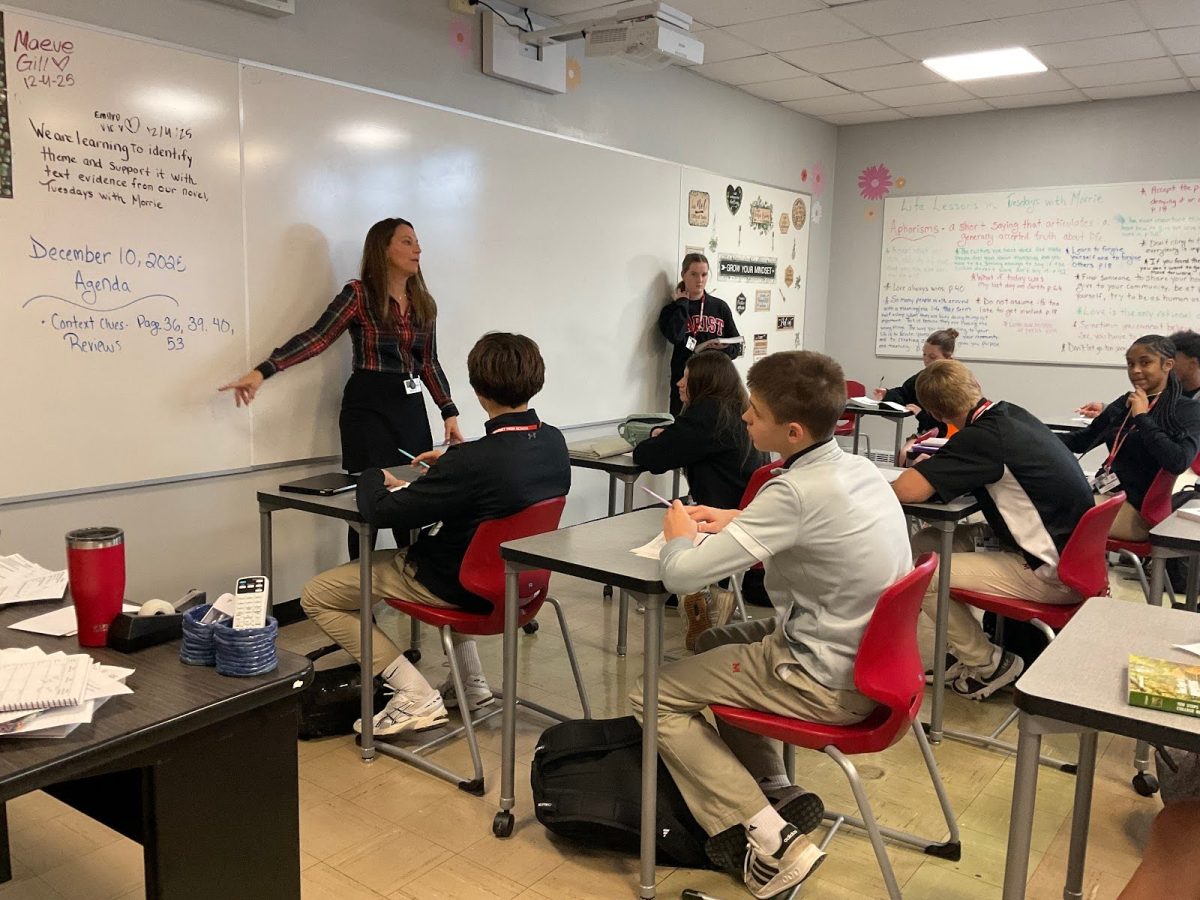
Music is played everywhere, schools included. Many teachers across Marist High School play their own class playlists for their students.
”When the playlist is on, you can tell it puts them at ease,” said Hauptman. “They all start talking about a song they like, and it helps to create conversation and community in the classroom.”
Many students find that very helpful, and enjoy music in class.
“I think class playlists are a good way to keep a group conversation going, because there is never total silence,” says Raymond.