












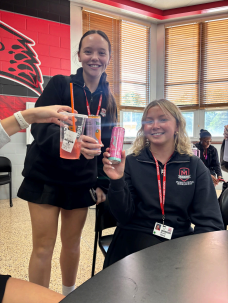
For many Marist students, caffeine is a staple in their everyday lives. From early mornings, to a middle of the day pick-me-up, or late night studying sessions, caffeine seems to keep students Marist students fueled.
In a survey conducted by MHS Media, 29 out of 35 students admitted to regularly consuming caffeine. That’s 82% of students saying yes to drinks like coffee, Alanis, Celsius, Red Bull and other caffeinated beverages.
“I like the taste and the fun drinks, but I also feel like my day starts off stronger with caffeine in me,” said a Marist senior who didn’t want to be named.
Energy drinks like Celsius and Alani Nu have become very popular because they are marketed as healthier or clean energy options. Many Marist students drink caffeine before sports, school or in the middle of the day for a quick boost of energy. While both brands have less sugars and additives than Red Bull and Monster, there are still negative effects.
Like any energy drink, caffeine stimulates the cardiovascular system leading to an increased heart rate and blood pressure. The caffeine content in Alani can cause feelings of anxiety, nervousness, and jitteriness which can be a detriment to students’ work.
“Without it, I get headaches and am constantly drowsy,” said a Marist senior.
Studies have shown that constant consumers of caffeine get headaches and feel drowsy when they stop consuming it because it triggers a withdrawal syndrome. Caffeine blocks the brain’s adenosine receptors, which promotes sleepiness, so when it’s removed, the sudden increase in adenosine causes headaches and fatigue.
“I love my Dunkin Donuts. I am scared of having caffeine withdrawals while I’m away on Kairos,” said Molly Julian.
24% of students polled drink more than one cup/can a day. With many students drinking caffeine in the afternoon and night, which can cause problems with sleep.
Consuming caffeine can delay the body’s clock making it harder to fall asleep at one’s usual bed time. Even if one does fall asleep, caffeine can disrupt the sleep cycle and decrease the amount of deep, restorative sleep.
“Its really hard for me to take an after school nap after drinking caffeine throughout the day,” said Julian.
Data collected during the survey reveals that 78% of students polled rely on caffeine to help them stay on task through the day.
“I feel drinking caffeine during the day helps me function better during school,” said junior Erin Trapani.
When someone consumes caffeine it releases dopamine which can help combat depression and improve overall mood.
“Caffiene makes me happy, especially Starbucks,” said Trapani.
Popular drinks like Starbucks refreshers have hidden caffeine many consumers do not know about. it is about the same amount as cola, which can still be the cause of brain stimulants and a caffeine rush.
“I cannot drink Starbucks before school. I feel super jittery and I can feel my heart racing in my chest,” said senior Abby McClorey.
While caffeine does have some negative effects there are some positives that attract consumers. Those include improved cognitive function, increase in energy levels, lower risk of heart diseases, and antioxidant properties.
As Marist students juggle academics, athletics, jobs, and demanding social lives, caffeine is a quick solution to many problems. Despite their appeal, health experts recommend weighing the pros and cons before downing another highly caffeinated beverage.

