


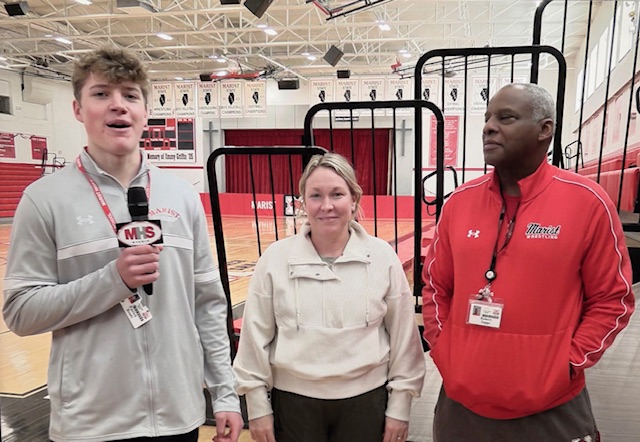



Marist High School wants their students to know they are cared about. The school provides counselors and social workers so that students can have extra support as needed.
“School counselors have about 250-300 students they work with, while social workers have a smaller case load that fluctuates based on needs,” says Martin Chappeto, a school counselor.
The counseling department is very easy for students to locate on the second floor and it is simple for students to make appointments with their counselors.
“We try to make sure that we have a pretty visible office. We have QR codes that students can scan to make appointments with us. Most of us have an open door policy. We want you to know that you can always drop in based on need,” says Chappetto.
They help guide students through many things.
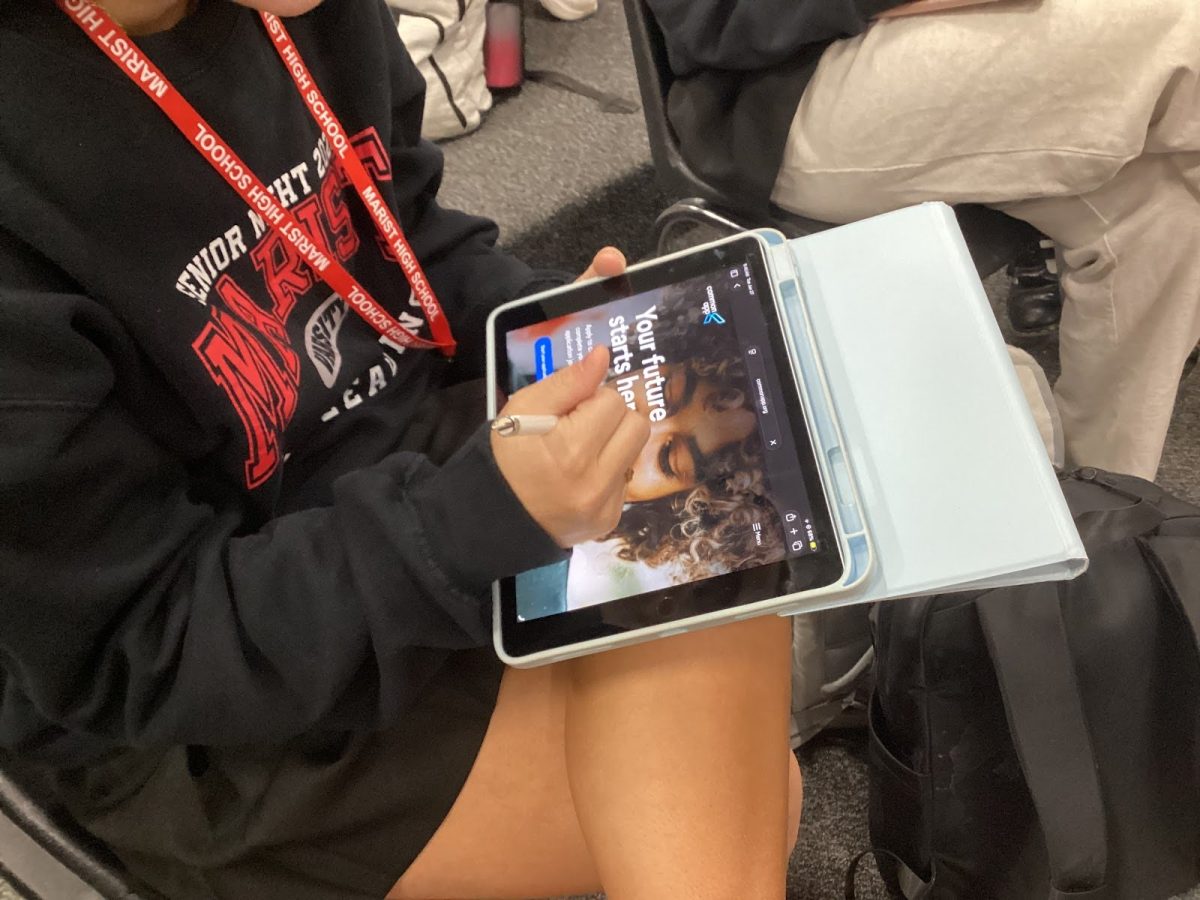
“We cover social-emotional health, academics, and the college and career counseling. Those are really like our three domains,” says Chappetto.
Counselors are there to help you strategize, make decisions, and get through hard times.
“We help answer the questions: How do you pick a college? Why do you pick a college? We check in on academics and help students strategize on how to do better in a class, or to determine if there may be more social-emotional help needed there,” says Chappetto.
The support doesn’t end there.
“Social workers provide an additional layer of social-emotional support,” says Marist social worker Cathaleen Novak. “Counseling, crisis intervention, and support to students, families, and the school community.”
Although similar, their roles are not the same.
“A social worker differs from a school counselor in that they primarily focus on social-emotional needs, while counselors concentrate more specifically on academics, college and career planning, and social-emotional development,” says Novak.
They also help students find other resources, if needed, outside of school.
“Social workers offer students an opportunity to explore and learn coping skills, process personal challenges, and locate resources and providers in the community for additional support,” says Novak.
Marist counselors and social workers also work together to educate students about mental health, in conjunction with the non-profit organization, Elyssa’s Mission.
“Signs of suicide, or SOS, helps to identify students who may be at risk and link them to vital resources in the community,” says Novak.